When Your Body Won’t Cooperate
£6.99
£4.99
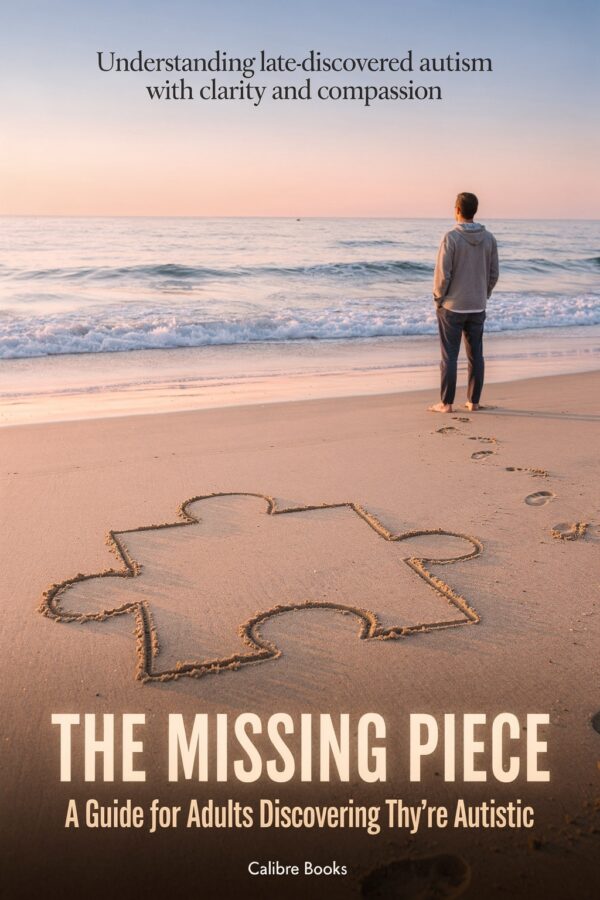
Are you an adult who’s just beginning to suspect you might be autistic? You're not alone, and your journey is valid. In "The Missing Piece: A Guide for Adults Discovering They're Autistic," uncover the path to understanding and embracing your true self.
Discover the Signs that may have been overlooked in childhood, and learn how autism uniquely presents in adults. This guide offers you the tools to recognize these signs and understand their significance.
Navigating the UK Assessment Process can be daunting, but it doesn't have to be. This book provides a clear roadmap to help you through the diagnostic journey, whether you're self-identifying or seeking a formal diagnosis.
Emotional Insights are crucial when facing a late diagnosis. Explore the complex feelings that arise and learn how to process them, turning what may feel like a setback into a powerful step forward.
Your journey doesn't end here—it’s just beginning. Order your copy of "The Missing Piece" today and take the first step towards a life of understanding, growth, and empowerment. Embrace who you are with confidence and courage.
What's inside
From the opening chapter
Embarking on the journey of understanding autism in adulthood can be both enlightening and transformative. Whether you're newly diagnosed, suspect you might be autistic, or are supporting an autistic adult, this book offers a compassionate and evidence-informed exploration of the autistic experience. Autism, a lifelong neurodevelopmental condition, is often misunderstood as solely a childhood concern. Yet, many adults live with autism, with some receiving diagnoses later in life. This revelation can reshape self-understanding and reinterpret past experiences. Understanding autism in adulthood requires moving beyond stereotypes to embrace a nuanced view that reflects diverse experiences. Autism can present differently across the lifespan, influenced by factors such as gender, culture, and individual coping strategies. Many adults may find that traditional diagnostic criteria, often based on childhood presentations, do not fully capture their experiences. This book aims to illuminate the myriad ways autism manifests in adults, reflecting the rich tapestry of the autistic community.