When Your Body Won’t Cooperate
£6.99
£4.99
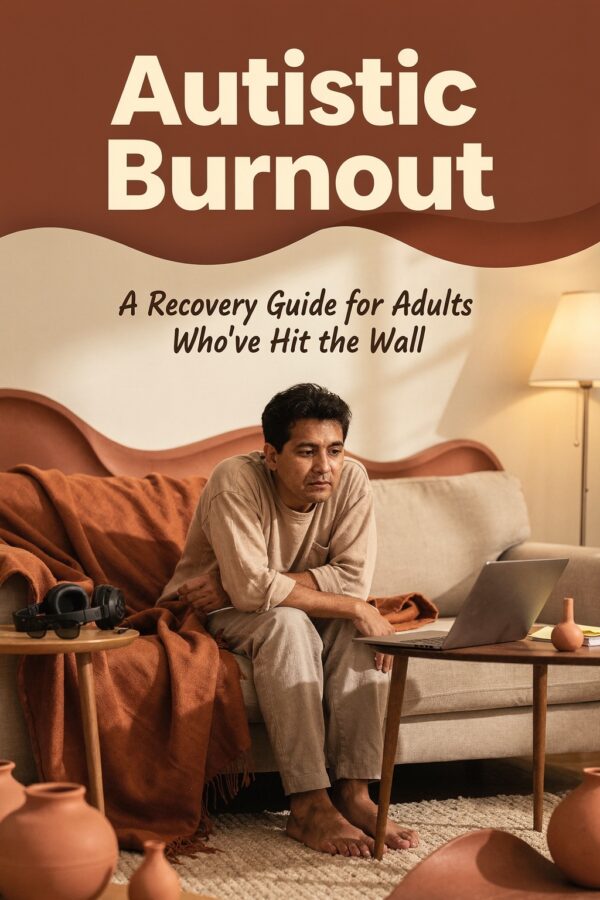
Are you feeling overwhelmed, exhausted, and at the end of your tether? You're not alone. Many autistic adults experience a unique form of burnout that's different from anything else. If you’ve been hitting the wall despite your best efforts to mask, manage sensory overload, and meet demands, this guide is for you.
Autistic Burnout: A Recovery Guide for Adults Who've Hit the Wall is your comprehensive resource for understanding, recovering from, and preventing the debilitating effects of autistic burnout.
Discover the tools and strategies you need to reclaim your life:
With chapters dedicated to rebuilding your capacity, building a supportive network, and embracing mindfulness, this guide offers a roadmap to recovery and beyond.
Take the first step towards healing and rediscover your strength. Click "Buy Now" to start your journey towards a balanced, fulfilling life.
What's inside
From the opening chapter
Autistic burnout is a profound state of physical, mental, and emotional exhaustion, often accompanied by a loss of skills and heightened sensory sensitivity. Distinguishing autistic burnout from occupational burnout is crucial, as the latter is typically linked to work-related stress and characterised by feelings of cynicism, inefficacy, and detachment. While occupational burnout is frequently discussed in workplace contexts, autistic burnout is a unique phenomenon primarily affecting individuals on the autism spectrum. It is not simply the result of overwork but stems from the ongoing effort to navigate a world that can feel overwhelming and unaccommodating. Imagine the challenge of operating in an environment that constantly bombards you with intricate social cues, sensory overload, and the pressure to conform to neurotypical standards. For autistic individuals, this is often the everyday reality. Autistic burnout arises when the cumulative effect of these demands exceeds their capacity to cope.